 English
 Spanish
 French
 German
 Italian
 Chinese (Simplified)
 Japanese
 Korean
 Arabic
 Portuguese


 Send Inquiry
Cyclohexanone Chemical
Price 100000.00 INR/ Metric Ton
MOQ : 1 Metric Ton
Cyclohexanone Chemical Trade Information
- Minimum Order Quantity
- 1 Metric Ton
- FOB Port
- MUMBAI
- Payment Terms
- Days after Acceptance (DA), Letter of Credit at Sight (Sight L/C), Telegraphic Transfer (T/T), Letter of Credit (L/C)
- Supply Ability
- 200 Metric Tons Per Month
- Delivery Time
- 1 - 2 Week
- Packaging Details
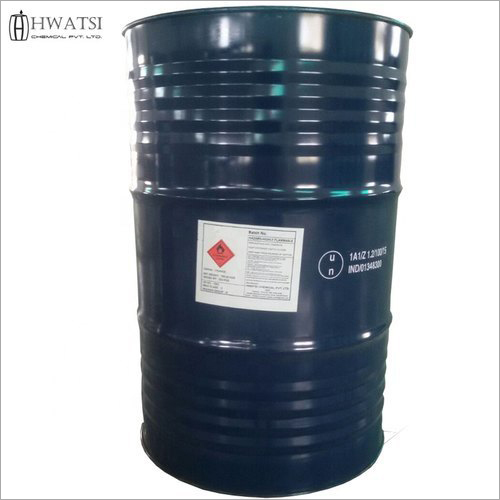
- It is Non Hazardous Cargo. We provide 225 kgs packing in Drums with Shrink wrapped, Palatalized.
- Main Export Market(s)
- Asia, Australia, Central America, North America, South America, Eastern Europe, Western Europe, Middle East, Africa
- Main Domestic Market
- All India
- Certifications
- ISO certified company and rated by Crisil - high in financial
About Cyclohexanone Chemical
The Cyclohexanone offered by us continues the same vein and keep enchanting our customers with our spotless quality. We make available the broad product range to the customers in minimum time. We are regular exporter of Cyclohexanone to various countries in palletized drums and containers in bulk quantity. The chemical offered by us is our regular product so we can provide immediate delivery to our customers. Further, they can avail various size of packets at reasonable price. We also continue in the same vein and keep enchanting our customers with our spotless quality. We make available the broad product range to the customers in minimum time.
Used in : Paints, Coatings, and Adhesives Manufactturer
Cyclohexanone Technical Details:
- Molecular Formula : C6H10O
- Purity : 99% Min
- Synonym : Cyclic ketone; Ketohexamethylene; Pimelic ketone; Pimelin ketone; Cyclohexanone; Cyclohexanone
- Boiling Point : 156.7 Degree centigrade
- Melting Point : -31 Degree centigrade
- Molecular Mass : 98.15 g/mol
- Flash Point : (cc) 44 c
- Odor : Water-wh. to pale yel. oily liq.,peppermint-acetone odor
- Slightly Solubility : In water
- Physical Form : Liquid
- Chemical Formula : C6H10O
- CAS Number : 108-94-1
- Appearance : Colorless Liquid
- Shelf Life : 2 year
- HS Code : 29142200
- Density : 948 kg/m
Primary Industrial Usage
Cyclohexanone plays a pivotal role in the chemical industry, with 95% of its production utilized for manufacturing nylon intermediates like caprolactam and adipic acid. This makes it integral to the creation of nylon fibers and resins that are used worldwide in textiles, plastics, and industrial materials.
Physical and Chemical Properties
Cyclohexanone is a colorless liquid with a characteristic odor, a boiling point of 155.6C, and a melting point of -31C. It readily dissolves in water and various organic solvents, and its molecular weight is 98.14 grams per mole. These properties make it suitable for diverse applications in chemical synthesis.
Supplier Information in India
Indian manufacturers, exporters, and suppliers offer cyclohexanone for domestic and international buyers, complying with global quality standards. With an established logistics network, reliable supply chains, and expertise in large-scale production, India is a significant hub for cyclohexanone distribution.
FAQ's of Cyclohexanone Chemical:
Q: What are the main industrial applications of cyclohexanone?
A: Cyclohexanone is primarily used for producing nylon intermediates, especially caprolactam and adipic acid, which are then converted into nylon fibers and resins. It is also used as a solvent and in the synthesis of various chemicals.Q: How is cyclohexanone manufactured on a commercial scale?
A: Commercially, cyclohexanone is typically produced via oxidation of cyclohexane in the presence of air using a cobalt catalyst, or through the hydrogenation of phenol. Both methods are widely implemented by chemical manufacturers in India and globally.Q: When should cyclohexanone be handled with extra care?
A: Cyclohexanone should be handled carefully at all times due to its flammable nature and potential health hazards such as skin and eye irritation. Appropriate protective gear and proper ventilation are necessary during storage and handling.Q: Where is cyclohexanone primarily sourced from in India?
A: Cyclohexanone is manufactured and exported by several companies in India, which is recognized for its robust chemical sector. Leading suppliers provide the compound both for domestic use and export markets, ensuring adherence to safety and quality standards.Q: What is the significance of cyclohexanone's solubility in water?
A: Cyclohexanone's moderate solubility in water allows it to be easily handled and mixed in aqueous solutions for various industrial processes, enhancing its usability in chemical reactions and formulations.Q: How does cyclohexanone benefit nylon production?
A: Cyclohexanone acts as a key precursor in manufacturing caprolactam and adipic acid-vital components for producing high-quality nylon fibers and resins. Its effectiveness in these processes drives the production of durable, versatile nylon products.
Tell us about your requirement

Price:
Quantity
Select Unit
- 50
- 100
- 200
- 250
- 500
- 1000+
Additional detail
Mobile number
Email

More Products in Solvent Chemicals Category

Liquid Phenol
Price 104000.00 INR / Metric Ton
Minimum Order Quantity : 1 Metric Ton
Chemical Name : Phenol
CAS No : 108952
Shelf Life : 1 Years
Application : solvent
Xylene Chemical
Minimum Order Quantity : 1 Metric Ton
Chemical Name : Xylene
CAS No : 1330207
Shelf Life : 24 Months
Application : Paint Thinner, Cleaning Agent, Printing, Rubber, Leather Industries

Xylene Solvent Chemical
Minimum Order Quantity : 1 Metric Ton
Chemical Name : Xylene
CAS No : 1330207
Shelf Life : 2 years
Application : Solvent in industrial applications

Butyl Glycol
Price 100000.00 INR / Metric Ton
Minimum Order Quantity : 1 Metric Ton
Chemical Name : 2Butoxyethanol; 111762; Butyl glycol; Butyl cellosolve; Butoxyethanol
CAS No : 111762

Contact Details

- HWATSI CHEMICAL PRIVATE LIMITED
GST : 27AABCH3433Q1ZA - Head Office: A Wing 332 and 311, Antophill Warehousing, Salt Pan Road, Wadala East,Mumbai - 400037, Maharashtra, India

- Factory On Port: Plot 586 And 587, Kandla Special Economic Zone, India.
Mr. Yash Bharatkumar Sheth
(INTERNATIONAL BUSINESS DEVELOPMENT TEAM)
 : +919821727511,
Other Office / Associate : TURKEY, DUBAI, IRAN, EGYPT, NIGERIA AND AUSTRALIA
- Mr. Yash Bharatkumar Sheth (INTERNATIONAL BUSINESS DEVELOPMENT TEAM)
- Mobile : +919821727511
-
 Send Inquiry
 Send Inquiry

|


 |
HWATSI CHEMICAL PRIVATE LIMITED
All Rights Reserved.(Terms of Use) Developed and Managed by Infocom Network Private Limited. |
