 English
 Spanish
 French
 German
 Italian
 Chinese (Simplified)
 Japanese
 Korean
 Arabic
 Portuguese


 Send Inquiry
Acetone Cas No. 67-64-1
Price 71500.00 INR/ Metric Ton
Acetone Cas No. 67-64-1 Specification
- Chemical Name
- acetone
- Other Names
- Acetone , Dimethyl ketone , Propanone , Dimethyl formaldehyde , Ketone propane , Dimethyl formaldehyde
- CAS No
- 67-64-1
- Application
- solvent
- Physical State
- Liquid Coating
- Usage
- Laboratory Chemicals, Paint Manufacture, Pesticide, Printing, Rubber Manufacture, etc.
- Shelf Life
- 2 Years
- Purity(%)
- 99.9%
Acetone Cas No. 67-64-1 Trade Information
- Minimum Order Quantity
- 1 Metric Ton
- FOB Port
- MUMBAI
- Payment Terms
- Days after Acceptance (DA), Letter of Credit at Sight (Sight L/C), Telegraphic Transfer (T/T), Letter of Credit (L/C)
- Supply Ability
- 200 Metric Tons Per Month
- Delivery Time
- 1 - 2 Week
- Packaging Details
- It is Non Hazardous Cargo. We provide 225 kgs packing in Drums with Shrink wrapped, Palatalized.
- Main Export Market(s)
- Asia, Australia, Central America, North America, South America, Eastern Europe, Western Europe, Middle East, Africa
- Main Domestic Market
- All India
- Certifications
- ISO certified company and rated by Crisil - high in financial
About Acetone Cas No. 67-64-1
The Acetone (CAS No. 67-64-1) offered by us is delivered flawlessly. We keep stern check on the product development, storage, packaging and delivery. It is delivered to our clients in safe packaging options. The packages are available in excellent and qualitative array of Acetone. We are a leading exporter of acetone to various countries and provides palletized drums and containers in bulk also. Our brand name is well known in the market for Acetone and we further, maintain large stock of this chemical so we can provide immediate delivery.
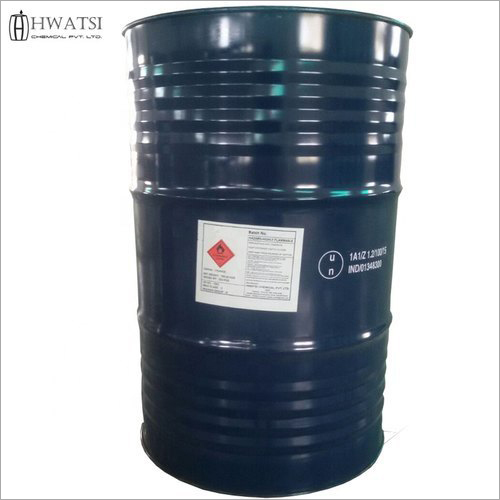
- Details: It is a Hazardous Cargo. We provide in 160 kgs packing in Drums.
- Used in: Acetone is widely used in industries such as Laboratory Chemicals, Paint Manufacture, Pesticide Mfg (Insecticides), Printing, Rubber Manufacture, SBR Latex Production, Wood Stains and Varnishes e.t.c.
HS Code : (29141100)
Acetone Technical Details
| Form | Liquid |
| Usage/Application | Laboratory Chemicals, Paint Manufacture, Pesticide, Printing, Rubber Manufacture, etc. |
| Packaging Size | 160 Kgs |
| Purity | 99.9% |
| Grade Standard | Technical Grade (Instead of that Write Pure Grade) |
| Packaging Type | Drum |
| Brand | Hwatsi Chemical Pvt. Ltd. |
Acetone Properties:
| Molecular Weight | 58.07914 g/mol |
| Molecular Formula | C3H6O |
| Isotope Atom Count | 0 |
| Covalently-Bonded Unit Count | 1 |
| XLogP3 | -0.1 |
| Hydrogen Bond Donor Count | 0 |
| Hydrogen Bond Acceptor Count | 1 |
| Exact Mass | 58.041865 g/mol |
| Monoisotopic Mass | 58.041865 g/mol |
| Heavy Atom Count | 4 |
| Complexity | 26.3 |
| Topological Polar Surface Area | 17.1 |
| Undefined Bond Stereocenter Count | 0 |
Industrial Use of Acetone:
- Laboratory chemicals
- Cleaning Solvent
- Adhesives and sealant chemicals
- Agricultural chemicals
- Intermediates
- Ion exchange agents
- Processing aids
- Viscosity adjustors
Consumer Uses:
- Adhesives and Sealants
- Fabric, Textile, and Leather Industries
- Paints and Coatings Industries
- Plastic and Rubber Industries
- Toys, Playground, and Sporting Equipment
Versatile Applications Across Industries
Acetone finds widespread utility as a cleaning solvent, paint thinner, adhesive and sealant ingredient, as well as a processing agent in laboratories and manufacturing plants. Its strong solvency capabilities enable efficient removal of resins, dyes, oils, and greases. Additionally, acetone serves as a key intermediate in pharmaceutical and agricultural chemical synthesis.
High Purity and Reliable Performance
With a purity level of 99.9%, this industrial-grade acetone delivers optimal results in sensitive operations, ensuring minimal contamination. Its stability and precise specifications support rigorous laboratory work and large-scale industrial processes alike, providing consistent, reproducible outcomes every time.
Safe Storage and Handling Guidelines
Due to its volatile and flammable nature, acetone must be stored in a dry, cool place and in tightly sealed containers. Proper ventilation is crucial during use. This product's shelf life is two years, provided that optimal storage conditions are maintained, thereby preserving quality and effectiveness for a wide range of applications.
FAQ's of Acetone Cas No. 67-64-1:
Q: How should acetone be stored to ensure maximum shelf life?
A: Acetone should be kept in a dry, cool place, away from direct sunlight and sources of ignition. Tightly sealed containers help prevent evaporation and contamination, ensuring the product remains stable for its two-year shelf life.Q: What benefits does acetone offer as a solvent in industrial and laboratory applications?
A: Acetone's high purity and exceptional solvency power allow it to dissolve a wide range of organic substances, making it ideal for cleaning, degreasing, and synthesizing chemicals. Its fast evaporation rate leaves minimal residue, which is crucial for precise lab and manufacturing work.Q: When is acetone commonly used in the printing and rubber manufacturing industries?
A: Acetone is frequently utilized during cleaning, ink removal, and as a process solvent in both printing and rubber manufacturing sectors. Its ability to dissolve polymer residues and inks ensures equipment and products remain free of contaminants and ready for further processing.Q: Where can acetone be applied aside from laboratories?
A: Apart from laboratory use, acetone is valuable in paint manufacturing, as a component in adhesives and sealants, pesticide production, agricultural chemicals, and as a viscosity adjustor in industrial formulations, highlighting its broad applicability.Q: What is the process for disposing of acetone safely?
A: Disposal of acetone should follow local regulations, typically involving collection in designated solvent waste containers. It should never be poured down drains due to its toxicity and flammability. Professional waste management services are recommended for bulk quantities.Q: How can the use of acetone benefit formulation processes in manufacturing?
A: Acetone acts as an effective carrier and diluent, allowing for even dispersion of ingredients and faster drying times in product formulations such as paints, adhesives, and coatings, thereby streamlining production and improving product quality.


Price:
- 50
- 100
- 200
- 250
- 500
- 1000+

More Products in Solvent Chemicals Category
Xylene Chemical
Minimum Order Quantity : 1 Metric Ton
Chemical Name : Xylene
CAS No : 1330207
Other Names : Dimethylbenzene, Xylol
Shelf Life : 24 Months

Xylene Solvent
Minimum Order Quantity : 1 Metric Ton
Chemical Name : Xylene
CAS No : 1330207
Other Names : Dimethylbenzene
Shelf Life : 2 years

IPA Pharma Grade
Price 70000 INR / Metric Ton
Minimum Order Quantity : 1 Metric Ton
Chemical Name : Ipa pharma grade
CAS No : 67630
Other Names : Isopropyl
Shelf Life : 2 Years

phenol chemical cas no 108-95-2
Price 104400.00 INR / Metric Ton
Minimum Order Quantity : 1 Metric Ton
Chemical Name : PHENOL
CAS No : 108952
Other Names : Carbolic acid; hydroxybenzene; Phenol
Shelf Life : 2 Years


- HWATSI CHEMICAL PRIVATE LIMITED
GST : 27AABCH3433Q1ZA - Head Office: A Wing 332 and 311, Antophill Warehousing, Salt Pan Road, Wadala East,Mumbai - 400037, Maharashtra, India

- Factory On Port: Plot 586 And 587, Kandla Special Economic Zone, India.
Mr. Yash Bharatkumar Sheth
(INTERNATIONAL BUSINESS DEVELOPMENT TEAM)
 : +919821727511,
Other Office / Associate : TURKEY, DUBAI, IRAN, EGYPT, NIGERIA AND AUSTRALIA
- Mr. Yash Bharatkumar Sheth (INTERNATIONAL BUSINESS DEVELOPMENT TEAM)
- Mobile : +919821727511
-
 Send Inquiry
 Send Inquiry

|


 |
HWATSI CHEMICAL PRIVATE LIMITED
All Rights Reserved.(Terms of Use) Developed and Managed by Infocom Network Private Limited. |
